Since 1976, American Hiking has worked with Congress, federal agencies, and many recreation and conservation partners on policy issues and legislation to ensure funding for trails, preservation of natural areas, and protection of the hiking experience.
Advocacy News
New NRT’s Announced on Eve of National Trails Day
June 3, 2016 – On the day leading into American Hiking Society’s National Trails Day, Secretary of the Interior Sally Jewell and National Park Service Director Jonathan Jarvis announced the…

AHS Report Highlights Hiking-Health Connections
May 26, 2016 – American Hiking Society is pleased to announce the release of it’s newest report, Hiking Trails in America: Pathways to Health, in which it makes the case that…

Major Victory for Conservation of America’s Great Outdoors
April 20, 2016 – As America prepares to celebrate Earth Day, the U.S. Senate passed legislation that would permanently reauthorize the Land and Water Conservation Fund (LWCF). First passed in…
House Trails Caucus
The mission of the bipartisan House Trails Caucus is to provide a forum for interested Members of Congress to work together for the creation and conservation of our natural landscape and recreation…


Registration is now open for Hike the Hill® 2026!
Virtual Issue Briefings February, 9-11, 2026
Issue Briefings Presented in Partnership with American Trails
In-Person Hike the Hill® in Washington, DC March 1-5, 2026
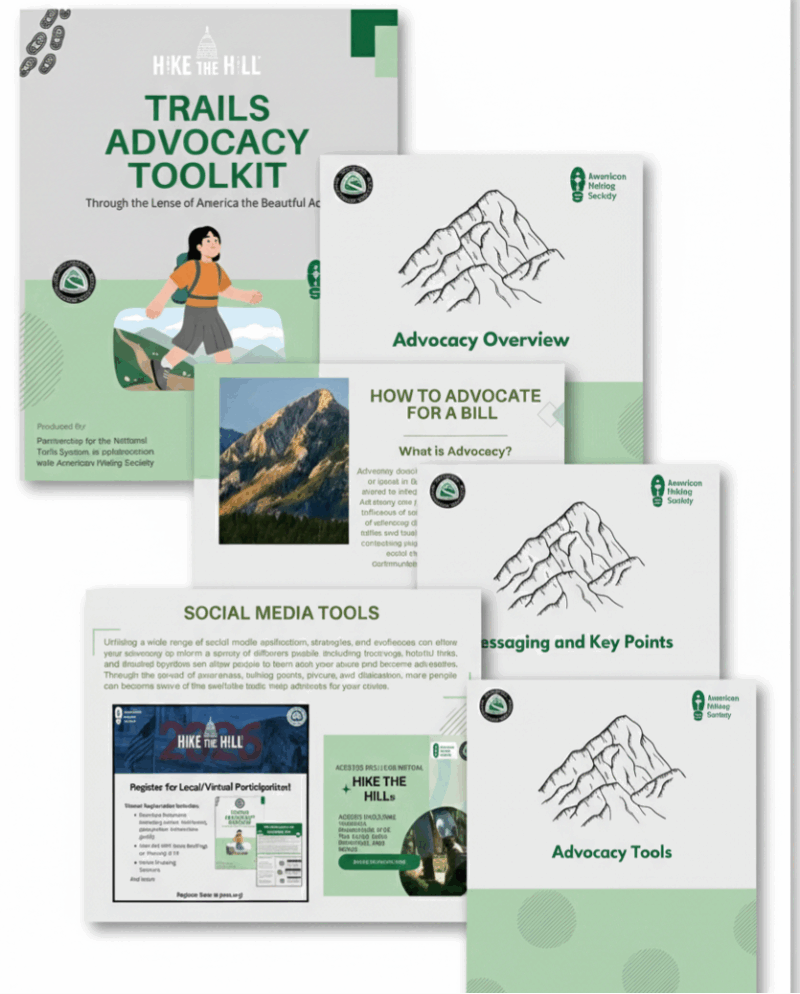
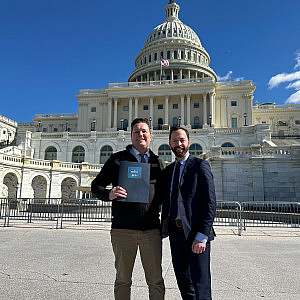
Celebrating its 29th year, Hike the Hill® is a joint effort between American Hiking Society and Partnership for the National Trails System to bring together the trails community to advance shared trail priorities with congressional and federal agency leaders including: trails funding, public lands management and conservation, and reauthorizing the National Parks and Public Lands Legacy Restoration Fund.
In 2026 the trails community faces a continued sense of urgency. It is paramount that the trails community’s voice is heard by attending in-person to strengthen key relationships and demonstrate the importance and value of trails.
Registration Types
In- Person Hike the Hill® - $150
- Sunday Welcome and Strategy Session
- REI Trails Celebration on Tuesday, March 2 from 5:30-7:30pm (Light Refreshments Included)
- Hike the Hill® Issue Briefing Participation (Live and Recording Available)
- Lunch on Monday if attending Department of Interior Meetings
- Hike the Hill® Branded Advocacy Materials for Congressional Meetings (Talking Points, Fact Sheets, and Leave Behinds)
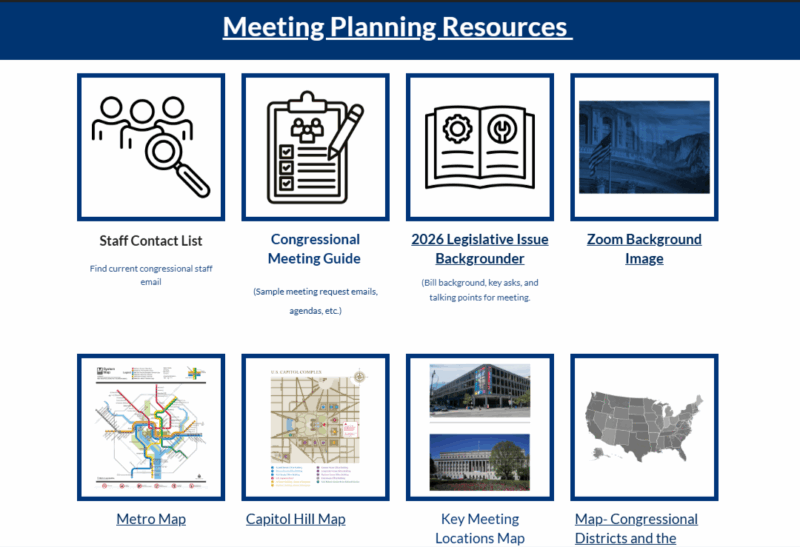
- Access to Congressional Staff Contact List
- Training Session and Resources on Running an Effective Congressional Meeting
- Group meetings with congressional committees and agency staff.
- (Registration does not guarantee a speaking role in group meetings. Participation may be limited due to capacity, issue focus, or any other reason.)
- Individual Congressional Office Meetings (scheduled on your own) as part of the collective Hike the Hill® effort.
- Local Issue Briefing Resources for when you return home
Local/Virtual Hike the Hill® Participation- $40
For just $40, your Virtual Registration equips you with the expert training and resources needed to be a powerhouse advocate from your own home:
- Expert Briefings: Learn the 2026 "State of Play" directly from national leaders.
- Advocacy Toolkit: Get sample meeting agendas, email templates, and congressional contact lists.
- Exclusive Resources: Access new branded advocacy materials, including talking points, fact sheets, and other handouts.
What's included:
-
- Hike the Hill® Issue Briefings (Live and On-Demand)
- Training Session and Resources on Running an Effective Virtual or Local Meetings
- NEW Hike the Hill® Branded Advocacy Materials for Congressional Meetings (Talking Points, Fact Sheets, and Leave Behinds)
- No Group Meeting Participation is Available for Virtual Participants
- Individual registration is not shareable
Registration is non-refundable after February 13, 2026
Schedule of Events
Monday, February 9 (Briefings Scheduled Between 2-5pm EST)
1:00pm
Briefing: Hike the HillⓇ Welcome Session
Description: This session will be a Welcome Session to go over plans and schedules for Hike the HillⓇ and welcome participants to the 2026 event.
Presenters:
- Courtney Lyons-Garcia, Executive Director, Partnership for the National Trails System
- Heather Klein Olson, Executive Director, American Hiking Society
- Candace Mitchell, Director of Operations, American Trails
- Tyler Ray, Senior Director for Programs and Advocacy, American Hiking Society
- Nora Kline, Communications Manager, Partnership for the National Trails System
3:30pm
Briefing: Land and Water Conservation Fund Overview and Annual Updates
Description: Updates on LWCF efforts and potential defensive work needed in 2026.
Presenters:
- Amy Lindholm, Director of Federal Affairs, Conservation Funding, Appalachian Mountain Club and National Coordinator, LWCF Coalition
Tuesday, February 10 (Briefings Scheduled Between 2-5pm EST)
2:00pm
Briefing: 2026 Congressional and Administration State of Play
Description: 2026 will continue to be a volatile year for congress and the federal government. This session will provide an overview of Congressional priorities in 2026, major pieces of legislation, midterm impacts, and a forecast of what’s to come for public lands.
Presenters:
- Shawn Swearingen, Director of Government Relations, Public Lands Alliance
4pm
Briefing: Understanding the Annual Appropriations Process and Funding for Trails
Description: This session will cover key funding updates with the recently enacted FY26 funding bills and a preview of what’s to come and trail related funding asks for FY27.
Presenters:
- Bart Johnsen-Harris, Director of Federal Climate Change Policy, Trust for Public Lands and Leader of the Environmental Appropriations Coalition
- Tyler Ray, Senior Director for Programs and Advocacy, American Hiking Society
- Courtney Lyons-Garcia, Executive Director, Partnership for the National Trails System
- Mark Larabee, Advocacy Director, Pacific Crest Trails Association
Wednesday, February 11 (Briefings Scheduled Between 2-5pm EST)
1pm EST
Briefing: Extending the National Parks and Public Lands Legacy Restoration Fund to Address the Maintenance Backlog- Key Advocacy Asks and Messaging
Description: Efforts to extend the Legacy Restoration Fund are picking up steam and your voice will be critical to gain support and advance the bill! Hear up to the minute updates and strategy on the efforts to reauthorize and extend the Legacy Restoration Fund to provide billions of dollars in funding to address deferred maintenance across public lands. Initially passed as part of the Great American Outdoors Act, the current authorization expired in 2025.
Presenters:
- Emily Douce, Deputy Vice President for Government Affairs, National Parks Conservation Association
- Dieter Fenkart-Froeschl, President and Chief Executive Officer of the National Forest Foundation
- Chandler Sam, PNTS Trails Apprentice
2:30pm
Briefing: How Transportation Legislation Impacts Trail Funding and Resources. Current Threats and Opportunities
Description: The surface transportation reauthorization bill that funds key trail programs like the Transportation Alternatives and Recreational Trails programs is up for reauthorization this year. Potential threats to eliminate or reduce these programs have been floated and the voice of every trail leader is needed to ensure these programs are included in the reauthorization. At the same time the administration is considering undoing decades worth of work on agency Travel Management Rules that guide trail use for all types of users, including motorized and non-motorized. Learn how the greater trails community is coming together on these efforts.
Presenters:
- Marianne Fowler, Senior Strategist for Policy Advocacy, Rails-to-Trails Conservancy
- Randy Rasmussen, Director, Public Lands & Recreation, Back Country Horsemen of America
- Duane Taylor, Director of Federal Affairs, Recreational Off-Highway Vehicle Association
4pm
Briefing: Trail Mix- Learn about priorities from leading trail organizations and how you can help amplify key asks to congress.
Description: Provide participants overviews, key points, and asks for legislation impacting trails and the National Trails System.
Presenters:
- Claire Cutler, Trail Policy Specialist, Continental Divide Trail Coalition
- Travis Boley, Association Manager, Oregon-California Trail Association
- Mike Dawson, Partnership for the National Trails System
Wednesday, February 25 (Briefings Scheduled Between 2-5pm EST)
4:00pm
Briefing: Advocate Locally- Make a National Impact for Trails
Description: Want to learn more about how to advocate locally with congressional staff or other elected offices or in online meetings? This briefing is for you! Learn the key role of in-district advocacy and how local advocacy is a key advocacy tool for engaging at the federal level. Speakers will share resources on how to request meetings with Congress, what a meeting agenda should look like, what are current advocacy priorities for trails communities (including annual funding, staffing, and extending the Legacy Restoration Fund), and other tips and tricks from seasoned advocates. You'll also hear about other opportunities to invite elected officials at any level to events on your trail and regularly share information with them to build a long relationship.
Presenters:
- Courtney Lyons-Garcia, Executive Director, Partnership for the National Trails System
- Claire Cutler, Trail Policy Specialist, Continental Divide Trail Coalition
March 1-5 In-Person Hike the Hill®
Sunday, March 1
1:30 pm-4pm Welcome and Strategy Session
5:30pm PNTS 25th and AHS 50th Anniversary Informal Celebration (Invitation to Come)
Monday, March 2
9:30am National Park Service Acting Director
11am National Park Foundation Briefing
12pm Bag Lunch Provided for Participants at the Department of the Interior
2pm US Forest Service Chief
Tuesday March 3
5:30-7:30pm REI Trails Celebration
Wednesday, March 4
All Day Congressional Meetings (Group and Individual)
3:30pm Congressional Briefing on Trails (Invitation Only Due to Room Capacity)
Thursday, March 5
All Day Congressional Meetings (Group and Individual)
*Registration does not guarantee a speaking role or attendance in group meetings. Participation may be limited due to capacity, issue focus, or any other reason.
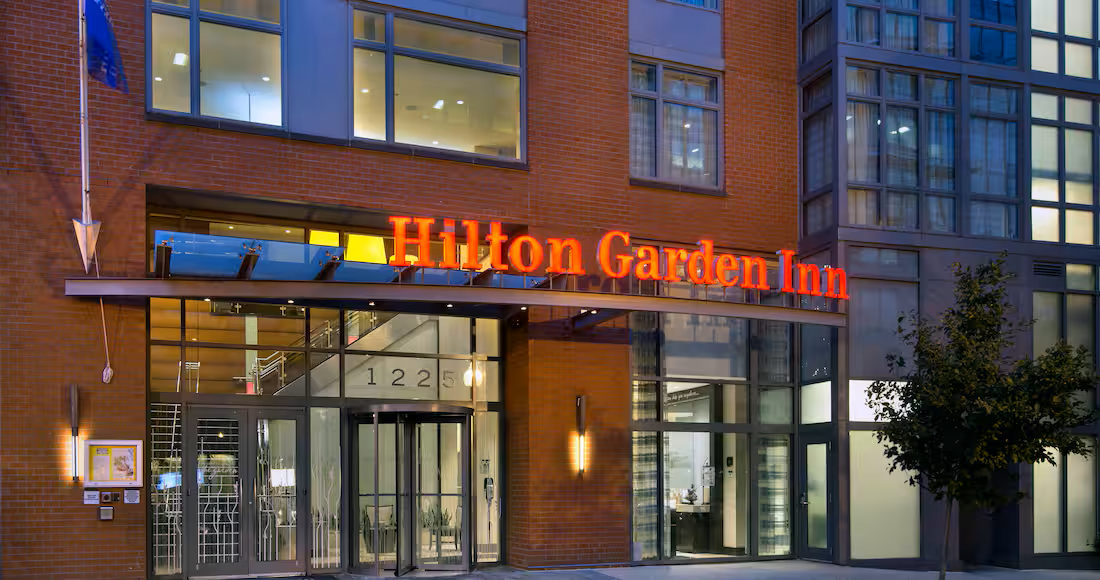
Host Hotel- Hilton Garden Inn US Capitol (NoMA)
Reservation Link
Room Block Deadline is February 13, 2026
IMPORTANT: In order to receive the $179/night rate you must book a "Flexible Rate" 1 King Bed or 2 Queen Bed Room AND forward the booking confirmation email to tray@americanhiking.org. The Hilton Hotel will manually add the room to the room block and honor the $179/night rate upon payment at check-out.
The Hilton Garden Inn- US Capitol (NoMA) will serve as the Hike the Hill® host hotel. We have secured a room block for $179/night (Single) plus tax and fees. Hilton Garden Inn US Capitol (NoMA) is conveniently located 1-minute from the NoMa Metro Station (Red Line) and a short walk from the REI DC (hosting the Trails Celebration). The hotel has many dining options onsite and nearby, space to gather with fellow attendees, and a business center. A grocery store and Starbucks are also next door. Standard rooms are 336-384 sq. ft. and include a desk, microwave, refrigerator, and tv.
Please note: While nearby this is a different hotel than last year.
Hotel Address: 1225 1 St. Street NE Washington, District Of Columbia 20002
Check-In: 4pm
Checkout:12pm
If this is your first Hike the Hill®, you haven't attended in a few years, or are looking to return to Washington, DC, we encourage you to join us in 2026!
Please reach out to Tyler Ray, tray@americanhiking.org or
Nora Kline, nora@pnts.org with any questions.




American Hiking works on a range of issues that affect public lands, hiking, and trails. The links below include information about a variety of policies, bills, and issues that have immediate or significant impacts on trails and the hiking experience. Do you have questions or suggestions about issues that affect the hiking experience? Email us!
The nearly 1,000,000 square miles that comprise U.S. public lands are our most treasured natural resource. Whether you’re a hiker enjoying the 193,500 miles of trail or one of the total 145 million recreation users, these lands are of enormous personal value to you. Public lands are also an economic driver for the recreation economy, generating 508,740 jobs and an economic output of $52 billion each year
The most pressing threats to public lands protections include shrinking National Monuments and expanding energy development. Such erosions, rather than expanding access, usually deprive hikers, anglers, hunters, campers, and all other permitted users the opportunity to enjoy their desired form of recreation, and, at best, obstruct views and generate noise and air pollution.
Legislation
Land and Water Conservation Fund (LWCF)
The Land and Water Conservation Fund (LWCF) is America’s most important program to conserve irreplaceable lands and improve outdoor recreation opportunities throughout the nation. The program has funded nearly one thousand trail projects and thousands of other projects ranging from National Parks, Forests and Wildlife Refuges to community parks and ball fields in all 50 states. Legislation is pending in Congress to permanently reauthorize and provide dedicated funding to the program.
Addressing Maintenance Needs on Public Lands
Our public lands are facing a $21.5 billion and growing maintenance backlog. When annual maintenance needs go unaddressed, long-term problems arise, impacting the public’s ability to access outdoor recreation. Closed trails, out-of-service restrooms, campgrounds in poor conditions, and impassable roads are only a few of the barriers that hikers face. Currently 193,500 miles of trails on federal lands need $1.71 billion of estimated maintenance.
Protecting Against Amendments to the Wilderness Act
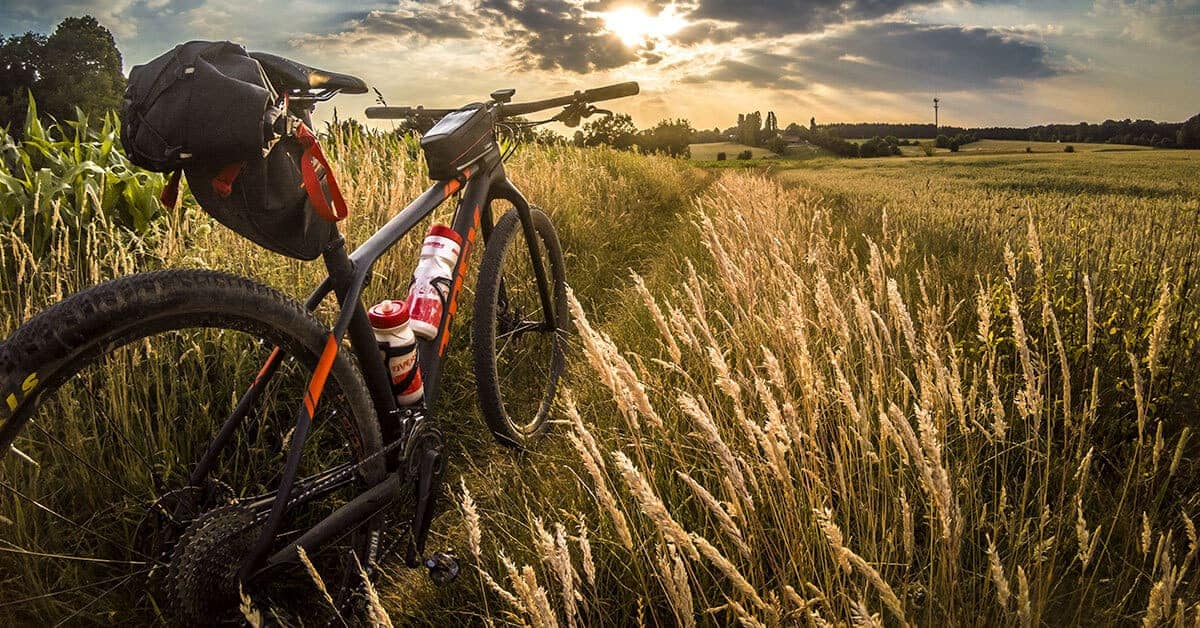
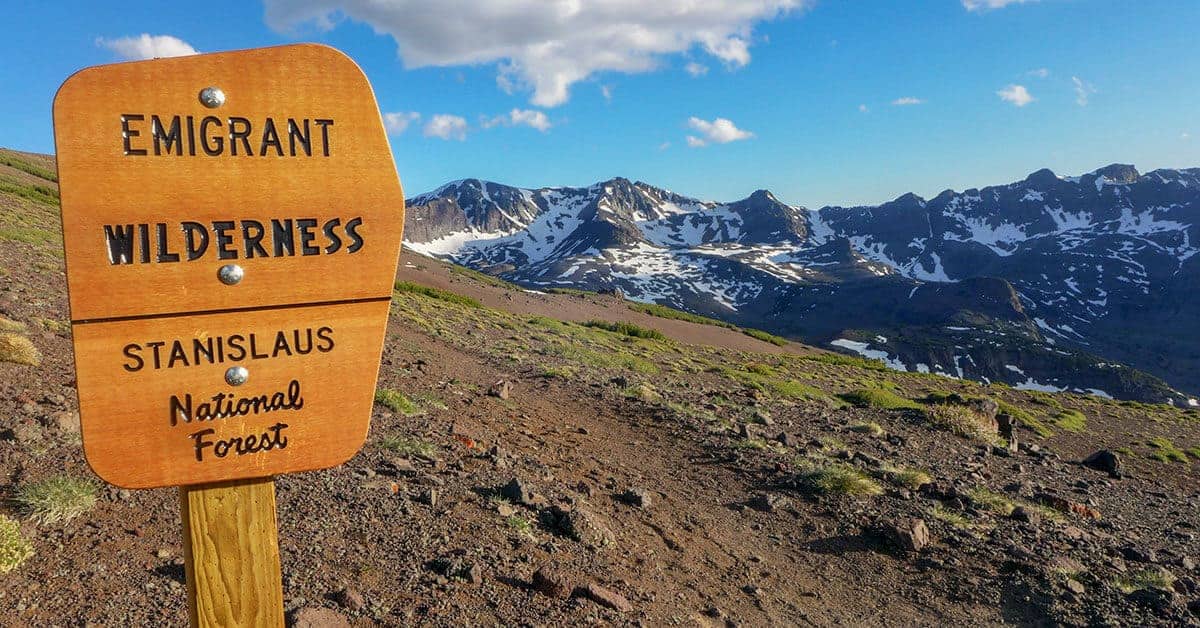
Efforts to amend the Wilderness Act threaten the continued protection of our most untouched and wild lands. American Hiking Society opposes the use of mountain bicycles in designated wilderness areas and areas under consideration for wilderness designation.
Completing our National Trails System
Celebrating the 50th Anniversary of the National Trails System and realizing the goal to achieve a completed and connected system is just as important today as when the law was enacted. Legislation before Congress including the National Scenic Trail Parity Act and the North Country National Scenic Trail Route Adjustment Act work towards that goal.
Trail Funding
Trails are the gateway to nearly every facet of outdoor recreation, including fishing, hunting, wildlife viewing, camping, and more. A failure to maintain and manage our nation’s trails stymies economic growth and access to healthy outdoor recreation.
Every Kid Outdoors Act
The Every Kid Outdoors Act congressionally authorizes the Every Kid in a Park program, providing every fourth grader and their family free access to all federal public lands and waters. The act will introduce the next generation to outdoor recreation and foster lifelong service to and enjoyment of our most treasured natural resource. Hundreds of thousands of students have taken advantage of the program since it began
House Trails Caucus
The mission of the bipartisan House Trails Caucus is to provide a forum for interested members of Congress to work together for the creation and conservation of our natural landscape and recreation activities through the preservation of trails.
Concerns Affecting the Hiking Experience
Funding for Trails
Funds for trails come from various sources, including federal appropriations, state funds, grants, and private donations. Regardless of funding source, most trails are founded on public-private partnerships and include some form of cost-sharing or leveraging, including volunteer support.
Mountain Biking on National Scenic Trails
In recent months there has been an upsurge of organized mountain biking groups attempting to gain access to sections of National Scenic Trails where mountain bikes are currently prohibited. These trails – or in some cases, sections of these trails – were neither designed nor built for mountain bike use. Due to concerns about safety, sustainability, and the displacement of hikers on trails with heavy bike usage, AHS believes that the sections of National Scenic Trails, where mountain bikes are currently prohibited, should remain closed to bikes.
Government Programs and Policies
Land and Water Conservation Fund (LWCF)
LWCF balances the extraction and sale of federal natural resources – offshore oil and gas – with the permanent protection of important lands and waters and access to recreation for all Americans.
America’s Great Outdoors (AGO)
AGO is an effort to promote America’s connection to the outdoors and to bolster current conservation practices nationwide. The Initiative includes a series of listening and learning sessions are being held this summer and early fall around the country for engaging recreation and conservation community partners in developing a 21st Century conservation plan.
Transportation Act & Recreational Trails Program (RTP)
RTP utilizing a “user-pay/user-benefit” model, uses just a small portion of the taxes from the sale of fuel purchased by nonhighway trail users such as off road vehicles and snowmobiles. These funds are used for all sorts of trail projects: projects that benefit not just motorized trail users but also hikers, bicyclists, and equestrians. These RTP funds are distributed to the states which subsequently awards grants for various trail projects.
Travel Management Planning – Protecting the Hiking Experience
The hiking experience on America’s public lands will be profoundly affected by a series of “Travel Management Plans” currently underway by the USDA Forest Service and Bureau of Land Management (BLM). The agencies recently enacted policies intended to address the problem of increasing damage from unmanaged off-road vehicle (ORV) recreation, which includes all-terrain vehicles (ATVs), dirt bikes, and 4-wheel drive vehicles.