
When Lightning Strikes on the Trail
Weather happens, and while it can oftentimes be unexpected the best thing you can be is prepared. We're here to learn more about what to do when a storm is rolling in and lightning is lighting up the sky while you're on the trail.
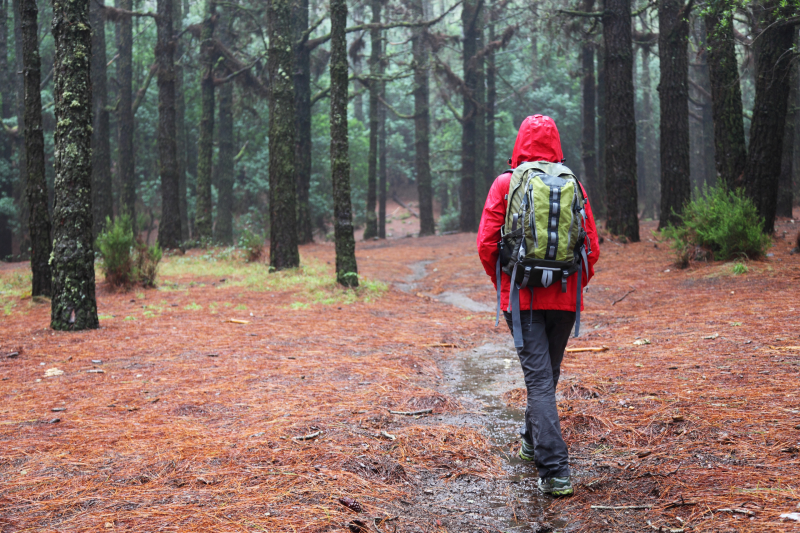
Picture this...
It’s July. You're a mile away from your campsite. When you checked the forecast, it was supposed to be a perfectly sunny day. But you didn’t account for the summer microclimates that happen in high altitudes. You find yourself in the middle of a sudden lightning storm and don’t remember what to do or where to go. Far out of service, you couldn’t look up what you should do. (Are you supposed to find a tall tree? Or stay away from it? Go into an open field? Or find cover? In that moment, you are confronted how little you actually know about lightning safety.)
Knowledge is power
Having a basic understanding of what lightning and thunder are can help you make sense of how lightning behaves.
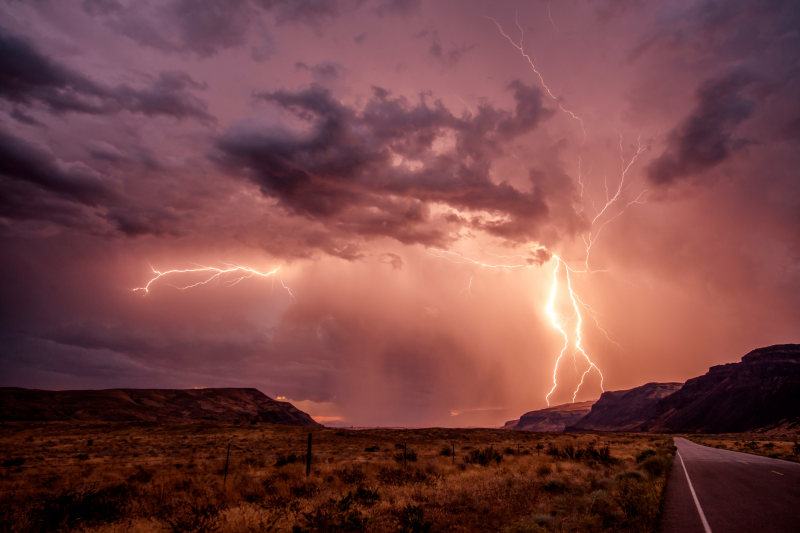
Static electricity builds up in storm clouds until it reaches a breaking point and needs to get released. The charged molecules from the sky need to meet the oppositely charged particles of the ground. This electrical release results in a 270,000 mph, 30-million-volt bolt of lightning that we see.
The speed and energy in this bolt of lightning emits incredible amounts of heat (up to 50,000ºF). This immense amount of instantaneous heat supercharges the air molecules around the strike. The explosive expansion of these molecules creates the rippling sound wave of thunder that you can hear up to ten miles away.
Since light travels quicker than sound, you’ll usually see lightning first, then hear its associated thunder.
The 30-30 Rule
The “30-30 Rule” utilizes this relationship between lightning and thunder. Use it to gauge how close you are to lightning.
- See a flash of lightning? Start counting the seconds. Every five seconds of silence is roughly equivalent to one mile of distance from you and the lightning.
- If you hear a clap of thunder within 30 seconds of seeing lightning, it means lightning is near and within striking distance. (The louder and sharper the thunder, the closer you are to the lightning.) Seek shelter immediately.
- Remain sheltered for 30 minutes from the last strike.
Safest Shelters
Not all shelters are created equal. These are some of the safer places you could take shelter in during a lightning storm:
- Go indoors: Sealed structures that will insulate and protect you from the elements.
- Parked and closed cars: Similar protection to being indoors. (However, convertibles or golf carts that are not closed leave you vulnerable to lightning.)
- Forest or deep valley: Seek shelter in a dense area of uniform, shorter trees rather than standing near tall, isolated ones. Deep valleys are also physically safer because they are lower than the surrounding terrain, lowering your chances of attracting a direct strike.
- Avoid Caves and Rock Overhangs: Do not huddle under rock overhangs, cliff faces, or shallow cave entrances. Lightning travels down vertical rock walls; if you shelter beneath them, the current can easily jump across the gap and use your body as a electrical bridge to reach the ground.
Top-of-mind tips
If you find yourself outdoors without access to shelter during a thunderstorm, keep these 3 tips in mind:
1. Go Low
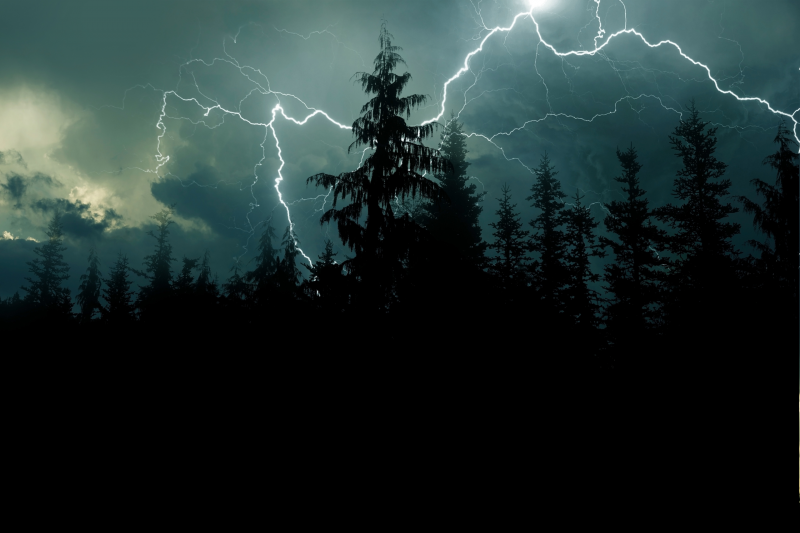
Get to lower elevation. Lightning is attracted to the tallest points at the highest elevations. If there is nowhere to go and it is unsafe to descend, look out for deep caves, ditches, divots or any other low points. Distance yourself from tall, isolated objects as they are the most likely targets for the impending strike.
2. Avoid Effective Conductors
If you find yourself in striking distance of a storm, avoid conductors such as water and metal. Beware of the poles in your tent as they likely contain metal, making your tent a potentially unsafe option when seeking shelter.
3. Minimize Ground Contact
If you’re completely trapped in an open and exposed area, do not lie flat (which increases your risk from ground currents). Instead, sit on your backpack or foam sleeping pad to add a layer of insulation, keeping your feet close together. If you’re with a group of people, it’s best for each person to stay about 20 feet apart from one another.
Struck by lightning
Getting struck by lightning is a severe injury, but can vary dramatically. (About 10% of lightning strikes are fatal.) A lightning strike can cause severe nerve, muscular, bone and organ damage, not to mention short circuiting of the heart and the brain. While the heart will usually restart shortly after on its own, it takes longer for your brain to follow suit. If a person is not breathing, it may be necessary to perform CPR. And just because a person seems fine, it doesn’t mean they are fine. Anyone struck by lightning should be taken to a medical professional immediately.